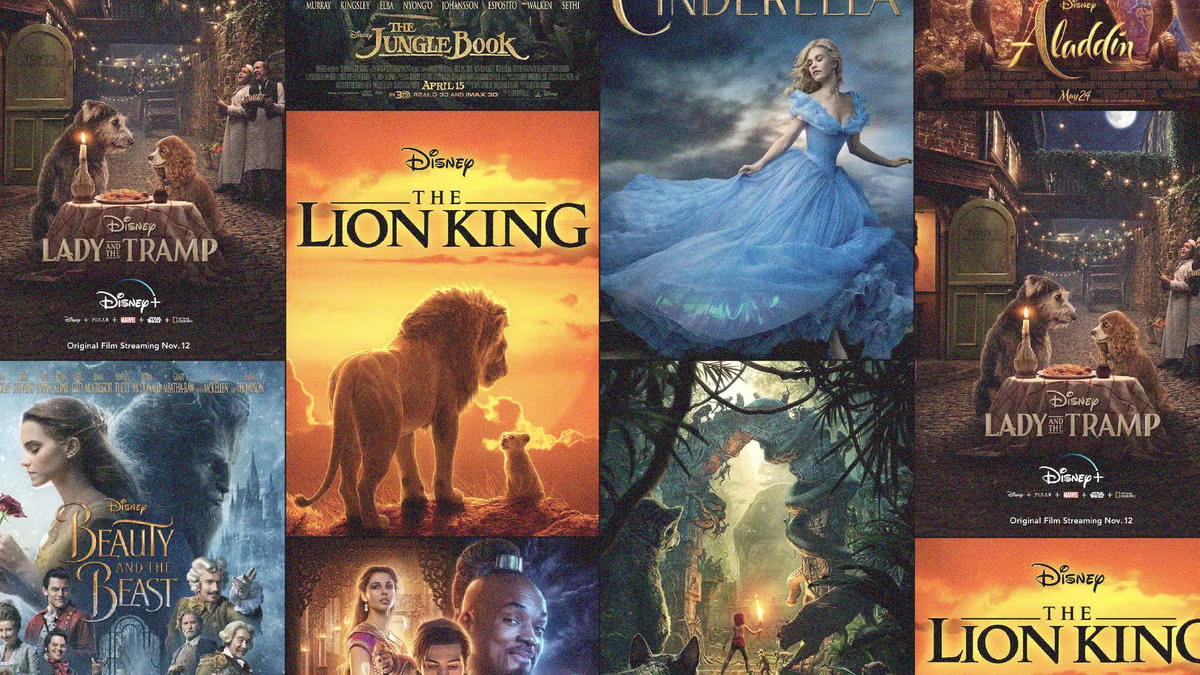
Disney’s history of movies reflects societal changes, from early fairy tales to modern films often featuring strong female characters and evolving portrayals of gender, with men sometimes depicted as less capable or more humorous compared to women. The films teach various lessons about life, such as embracing individuality, facing fears, and the consequences of dishonesty, while also inspiring viewers with themes of perseverance and self-acceptance. Changing Depictions of Characters Evolution of Male and Female Roles: While early Disney films often emphasized female weakness or subservience, modern animations frequently present strong female characters in contrast to less mature or foolish male protagonists, who may be the butt of jokes. Gendered Behaviors: Academic analysis shows gendered behaviors displayed by Disney protagonists, with women often portrayed as more intelligent and men as stronger or funnier. Life Lessons and Values Embracing Individuality: Many Disney films encourage viewers to stay true to themselves, accept who they are, and not to worry about what others think. Perseverance and Courage: Characters are often shown overcoming challenges, facing fears, and demonstrating that they are braver and stronger than they believe. Consequences of Actions: Lessons like the story of Pinocchio teach about the negative consequences of lying and the importance of honesty. Societal Context and Cultural Influence Reflecting Culture and Myths: Disney films are often inspired by fairy tales, myths, and legends from various cultures, such as “The Lion King” being influenced by Shakespeare’s Hamlet. Adaptation and Modernization: These stories are adapted for younger audiences, but also contain deeper meanings that become more apparent with age, influencing and teaching new generations of viewers.